


Care advice
How to wash
your silk clothes?
"At Soi, we carefully select our materials to ensure the highest quality and durability of your pieces.
There are many factors that can age textiles: excessive exposure to UV rays, storage conditions, or inadequate washing and drying methods.
To keep our beautiful pieces as long as possible, we must take care of them by adopting the right washing and drying conditions because each material has its specificity. We reveal you our secrets to pamper your clothes and keep a new aspect, fibers in good condition and a beautiful fluidity!"
Aurélie & Julia
En résumé
Laver la soie en 6 gestes
1. Lavez à la main, à l'eau froide, avec une lessive spéciale soie.
2. Ne laissez pas tremper plus de 5 minutes, et sans adoucissant.
3. Ne frottez pas, ne tordez pas : pressez doucement.
4. Épongez en roulant la pièce dans une serviette, sans essorer.
5. Faites sécher sur cintre, à l'abri du soleil et de toute source de chaleur.
6. Repassez à sec, sur l'envers, fer au plus bas et sans vapeur.
Pièce doublée ? Suivez l'étiquette : le pressing est souvent recommandé.


Tip no.1
How to wash a silk garment?
Robes, chemisiers, blouses, foulards, vous avez craqué pour l'une de nos pièces en soie et vous voulez connaître nos conseils pour en prendre soin et les garder le plus longtemps possible ? On vous dit tout, une fois les bonnes indications en main pour laver de la soie, ce n’est pas si compliqué !
La soie est une matière naturelle, noble et délicate qui peut être portée plusieurs années si elle est bien entretenue. La soie est donc à manier avec précaution. Utiliser les bonnes conditions de lavage pour la soie est primordial pour ne pas abîmer la fibre. Mousseline, crêpe ou twill, ces tissus aux aspects différents (mats, brillants, souples, etc.) sont tous issus d’une même fibre : la soie. Avant de laver votre vêtement en soie, vérifiez les instructions relatives à l’entretien, inscrites sur l’étiquette intérieure.
Découvrez toutes nos astuces et les différentes étapes à suivre pour laver votre pièce en soie correctement et la garder de nombreuses années.


1. Washing silk
La soie doit être lavée délicatement. Nous recommandons un nettoyage à froid à la main, avec la possibilité d’un lavage à sec, si indiqué sur l’étiquette du vêtement (pièce doublée), il faudra confier votre pièce au pressing. Nous déconseillons le lavage en machine pour vos pièces en soie.
Comment laver la soie à la main ? Utilisez une lessive spéciale pour soie et ne laissez pas tremper votre pièce plus de 5 minutes dans l’eau savonneuse. Veillez à ne pas ajouter d’adoucissant, car cela graisse et alourdit la matière. Pensez à enlever vos bijoux et à vérifier l'état de votre bassine ou évier pour éviter les fils tirés. Évitez de frotter pour enlever une tache ou de tordre le vêtement.
*En cas de tache, agissez rapidement pour éviter que la tache sèche et demandez conseil à un professionnel. N’utilisez pas de détachant.


2. Drying silk
We strongly advise against machine spinning and tumble drying a silk garment, as this can damage the fiber and cause your garment to shrink. Once the silk wash is finished, pre-dry your garment gently by rolling it in a terry towel without wringing or twisting it. Silk is sensitive to light, so place your garment away from a heat source and direct sunlight as this can cause discoloration, weakening and accelerating wear. Drying can be done on a hanger, in the open air.


3. Ironing silk
Can silk be ironed? Silk dries very quickly and can be ironed, but care must be taken. How to iron silk? Silk should be ironed dry with a cool iron. When ironing silk, put the garment on the reverse side. The iron should be at the lowest possible temperature and without steam to avoid damaging or burning the fiber. Do not press your iron on the seams. When you have finished ironing your silk garment, place it on a hanger away from direct sunlight or a heat source and wait until it is completely dry before putting it away.
Now you know all our tips for washing, drying and ironing your silk garment, whether it is a shirt, blouse, dress or skirt. By following these simple steps from our silk care guide, your garment will look impeccable after every wash. Carefully following the silk washing instructions will ensure the longevity of your piece.
Nos pièces en soie
Foulards imprimés des deux côtés et roulottés à la main, chemisiers et robes : découvrez nos foulards en soie, nos chemisiers en soie et nos robes en soie.


Tip no.2
100% Viscose Twill
1. Washing
To take the best care of your piece, prefer hand washing.
2. Drying
The tumble dryer is not recommended for a viscose garment, drying on a hanger is more
more appropriate. Don't worry if your garment comes out of the machine with a "cardboard" effect, the fabric will regain its initial texture once dry and ironed.
3. Ironing
Viscose should be ironed while still wet, on the reverse side, at about 110° with a pattemouille
for more precaution. It is at this stage that the viscose garment finds its initial size. It
It is important not to use the steam function of your iron to avoid damaging the garment.


Tip no.3
Silk - Viscose
1. Washing
Hand-wash your silk-viscose blend garment inside out with similar colors. Remember to remove your jewelry and check the condition of your basin or sink to avoid snagging the fabric.
2. Drying
Do not use a dryer for silk-viscose garments; air-drying on a hanger is more appropriate. Avoid hanging it in direct sunlight.
3. Ironing
This fabric dries quickly and should be ironed while still damp, on the reverse side. Use a damp cloth as a precaution if the garment is already dry. The iron should be set to the lowest possible temperature and without steam to avoid damaging the fibers.


Tip no.4
Cotton
1. Le lavage
Choisissez un programme délicat à 30° maximum. Lavez vos pièces avec des coloris similaires. Ne pas faire tremper. Le nettoyage à sec est autorisé.
2. Le séchage
Le sèche-linge est à proscrire, préférez un séchage à l’air libre est plus approprié.
3. Le repassage
Repassez votre vêtement à l’envers (ne repassez pas directement sur l’imprimé). Utilisez la position coton, à température basse (110° maximum).


Tip no.5
Crinkle fabric
1. Washing
Select a delicate cycle with cold or very lukewarm water (30°C maximum) for machine washing. Turn your garment inside out and use a mild detergent. If you choose to wash by hand, do not wring out the fabric while it is damp. Remember to remove your jewelry and check the condition of your basin or sink to avoid snagging the fabric. Dry cleaning is permitted for winter crepe garments.
2. Drying
Do not use a dryer; drying on a hanger is more appropriate. Don’t worry if your garment comes out of the machine feeling stiff—the fabric will regain its original texture once dry and ironed.
3. Ironing
Viscose should be ironed while still damp, on the reverse side, at approximately 110°C using a damp cloth for added protection. It is important not to use the steam function on your iron to avoid damaging the garment.


Tip no.6
Plain Jersey
1. Washing
Select a delicate cycle with cold or very lukewarm water (30°C maximum) for machine washing. Turn your garment inside out and use a mild detergent. If you choose to hand wash, do not wring out the viscose while it is wet. Remember to remove your jewelry and check the condition of your basin or sink to avoid snagging the fabric.
2. Drying
Do not use a dryer; drying on a hanger is more appropriate. Don’t worry if your garment comes out of the machine feeling stiff; the fabric will regain its original texture once dry and ironed.
3. Ironing
Viscose should be ironed while still damp, on the reverse side, at approximately 110°C using a damp cloth for added protection. It is important not to use the steam function on your iron to avoid damaging the garment.


Tip no.7
100% Wool
1. Washing
Prefer a cold wash, on a delicate or wool program. Turn the garment inside out and use a mild wool detergent. You can also opt to hand-wash inside out.
2. Drying
There are several things to avoid: tumble-drying, drying in the sun or on a radiator, and drying on a hanger to avoid damaging or distorting Knitwear . Lay your sweater flat on a towel at the bottom of a bathtub or shower, or flat on a drying rack, pressing gently to wring it out. Then roll it in a dry towel to absorb any remaining excess water. Finally, leave to air dry.
3. Ironing
Do not iron.
Vos questions sur l'entretien de la soie
Peut-on laver la soie en machine ?
Nous le déconseillons. Le lavage à la main, à l'eau froide, avec une lessive spéciale soie, est le plus sûr pour la fibre. Une pièce doublée se confie au pressing si l'étiquette l'indique.
À quelle température laver la soie ?
À l'eau froide. L'eau chaude fragilise la fibre et peut faire rétrécir la pièce.
Combien de temps laisser tremper la soie ?
Pas plus de 5 minutes dans l'eau savonneuse, sans adoucissant : il graisse et alourdit la matière.
Comment sécher un vêtement en soie ?
Sans essorage ni sèche-linge. Roulez la pièce dans une serviette éponge pour absorber l'eau, puis laissez-la sécher sur cintre, loin du soleil et des sources de chaleur.
Comment repasser la soie ?
À sec, sur l'envers, avec un fer à la température la plus basse et sans vapeur. Évitez d'appuyer sur les coutures.
Comment enlever une tache sur de la soie ?
Agissez vite, sans frotter et sans détachant, et demandez conseil à un pressing.
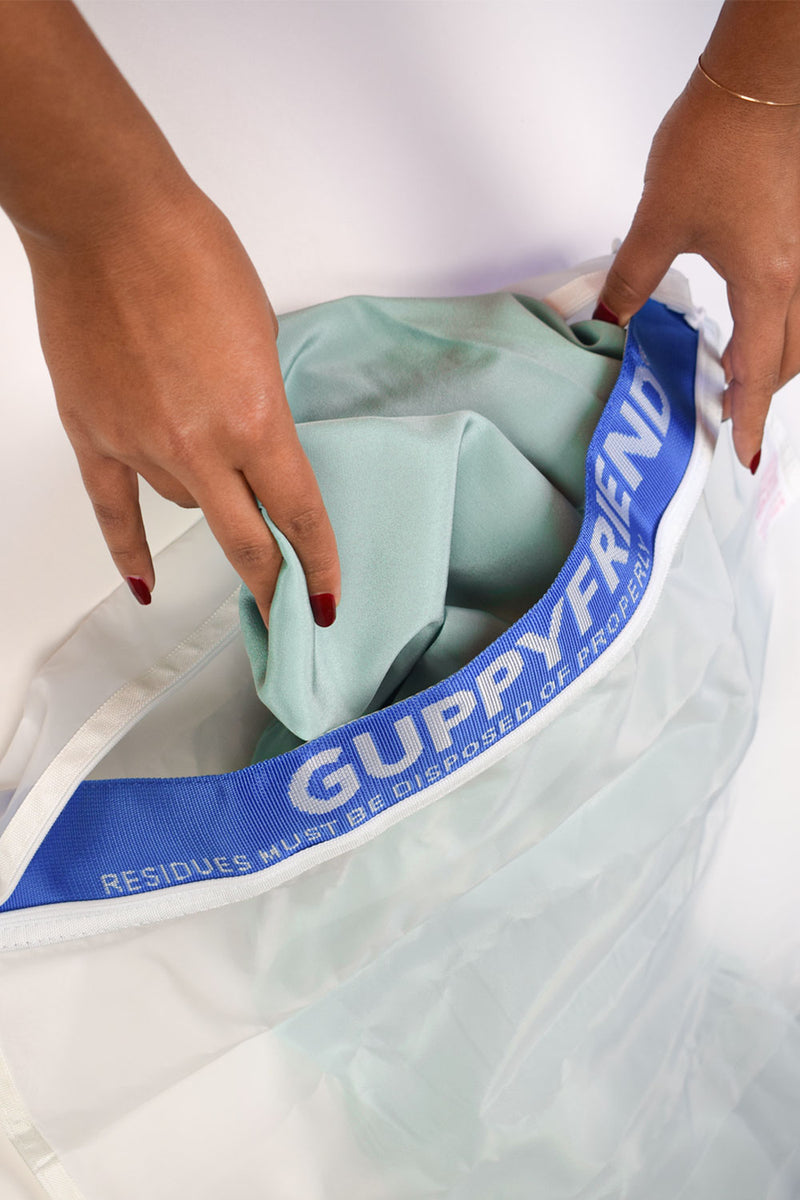
Eco-Responsible Washing Bag
Grâce à son action antifriction, le sac de lavage permet aussi bien de chouchouter le textile que de faire un geste rapide et simple pour la planète !
Etape 1
Remplissez le sac aux ⅔ dans une machine à 40° maximum.
Etape 2
Utilisez le sac avec de la lessive et de l'adoucissant sans plastique.
Etape 3
Jetez les fibres qui se trouvent au fond du sac après chaque utilisation à la poubelle non recyclable.
Etape 4
Ne passez pas le sac en sèche-linge et ne convient pas aux vêtements avec de grosses taches et couverts de poils d’animaux.
Etape 5
Le sac de lavage ne peut pas être repassé ni séché en plein soleil.


